• Tentang Unud
  • E-Library
  • IMISSU
  • LPPM
  • OASE
  • en ENG
    • en INA
    • en ENG
MASTER OF MANAGEMENT STUDY PROGRAM
UDAYANA UNIVERSITY
  • HOME
  • PROFILE
    • History
    • Vision, Mission, And Goals
    • Educational Philosophy
    • Program Specification
    • Organizational structure
    • Graduate Profile
    • Tracer Study
  • LECTURER
  • ACADEMIC
    • Accreditation
    • Curriculum
    • Course Plan
    • Description of Course Unit
    • Appeal Procedure
    • Assessment Criteria
    • Admission of new students
    • Academic Handbook
  • STUDENT AFFAIRS
    • HIMA Decree
  • PUBLICATION
    • E-Journal Master of Management (OJS)
    • Printed Journal of Master of Management
  • ALUMNI ORGANIZATION
  • FACILITY
    • Computer Lab Room
    • Disability Support Facilities
    • Parking
    • Learning Fasilities
    • Library
    • Public space
    • Capital Markets Lab
    • Safety and Environment
    • Online Academic Service for E-learning (OASE)
    • UNUD Integrated Management Information System (IMISSU)
  • ACTIVITIES
    • Workshop
    • Seminar
    • Public Lecture
  • CAREER DEVELOPMENT
  • Home
  • Curriculum

Curriculum


  1. Identity

Institution Name

:

Udayana University

Name of Educational Institution

:

Udayana University

Study Program Name

:

Bachelor of Management Study Program

Year Established 

:

1998

External Accreditation  

:

LAMEMBA & ABEST21

Accreditation Status

:

Excellent (LAMEMBA Decree No. 629/DE/A.5/AR.10/VIII/202)

Graduate Title 

:

Master of Management (M.M.)

Minimum/Maximum Study Period 

:

Min. 2 years (4 semesters), maxi. 4 years (8 semesters) 

Minimum Credits

:

54 credits

Medium of Instruction

:

Bahasa Indonesia and English 

Admission Requirements

:

Prospective students should not forget about their Master of Management degree. The admission procedure is carried out through 3 types of selection arranged by the University:

  1. Selection of new student admissions for Professional, Masters and Doctoral Programs at Udayana University

  2. Undergraduate to Master's Program Learning Acceleration Program Pathway

  3. Past Learning Recognition Pathway (RPL)


B. Study Program Profile

Graduate Profile

  1. Manager: A manager capable of competently, skillfully, and professionally managing organizations at national and international levels.

  2. Entrepreneur: An entrepreneur in the hospitality field who is resilient, creative, and innovative, and able to compete at national and international levels.

  3. Management Consultant: A management consultant capable of providing consultation and solutions on the best ways to manage businesses in the hospitality field within national and global scopes.

  4. Academician: A professional educator capable of transforming, developing, and disseminating knowledge and technology in the field of management globally through education, research, and community service.

  5. Researcher: A researcher with analytical and critical thinking abilities, capable of producing scholarly works published in national and international journals.

Scientific Focus

The Bachelor of Economics program at the Faculty of Economics and Business, Udayana University, focuses on the advancement of economic science that supports sustainable development through theoretical, empirical, and evidence-based policy approaches.

The primary focus of the curriculum is on mastering micro- and macroeconomics, regional development economics, international trade economics, population economics, institutional economics, economic research methodology, and quantitative analysis. These competencies serve as the foundation for graduates to comprehensively analyze various economic issues, particularly those related to sustainable development economics, sustainable tourism, institutional economics, and the creative economy.

To strengthen its academic character, the program has developed distinctive study materials centered on culture-based development economics and sustainable development policies. This approach integrates the cultural values of Bali, inclusive development, the creative economy, the green economy, and the Sustainable Development Goals (SDGs), enabling graduates to formulate development solutions that are adaptive to global dynamics without compromising local values.

Relevance to Industry Needs

The curriculum for the Bachelor of Economics program is designed based on the results of tracer studies, focus group discussions (FGDs), national and international benchmarking, as well as the needs of the business world, the government, research institutions, and international organizations. The composition of the course material ensures that graduates are prepared to possess the competencies required to become managers, entrepreneurs, management consultants, academics, and researchers.

Learning Methods

Teaching methods at the PSMM, FEB, Unud: group discussions, case studies, collaborative learning, cooperative learning, project-based learning, and problem-based learning. Face-to-face instruction (lectures) employs case studies and group discussions with problem-solving assignments as examples. Laboratory sessions utilize project-based learning, with assignments such as developing specific projects. Field practice sessions utilize problem-based learning, group learning, and group discussions with assignments such as creating a portfolio and solving problems.


C. Student Learning Outcomes (SLO)

Attitude

Actualize the values of Pancasila and internalize academic values, norms, and ethics (A). 

Knowledge

Mastery of management and organizational theory (K1). 

Mastery of research methodology (K2). 

General Skills

Able to operate information and communication technology appropriately in the context of scientific development (GS1).

Able to lead organizations and utilize business and consulting opportunities in the hospitality sector to achieve competitive advantage at the national and/or international level (GS2)

Able to build networks in education, research, community service, and other fields with various stakeholders, at the national and/or international level

Special Skills

Able to identify and process data and interpret the results using appropriate analytical tools (SS1).

Able to develop logical thinking through scientific research in the field of management science (SS2) 


D. Daftar Mata Kuliah

Semester 1

  1. Strategic Marketing Management

  2. Strategic Financial Management

  3. Strategic Human Resources Management

  4. Alternative Tourism Business

  5. Business Research Methodology

  6. Strategic Operations Management


Semester 2

  1. Applied Strategic Management

  2. Entrepreneur Project

  3. Elective/Concentration Course a)b)c)d)**)

  4. Elective Course*)

  5. Elective Course*)


Semester 3

  1. The Philosophy of Management Science

  2. Specialization/Concentration Courses (Major/Concentration Research) a)b)c)d)**)


Semester 4

  1. Thesis Research Proposal

  2. Feasibility of Thesis Findings

  3. Thesis


News

  • Happy National Batik Day 2026...
    Jumat, 2 Oktober 2026
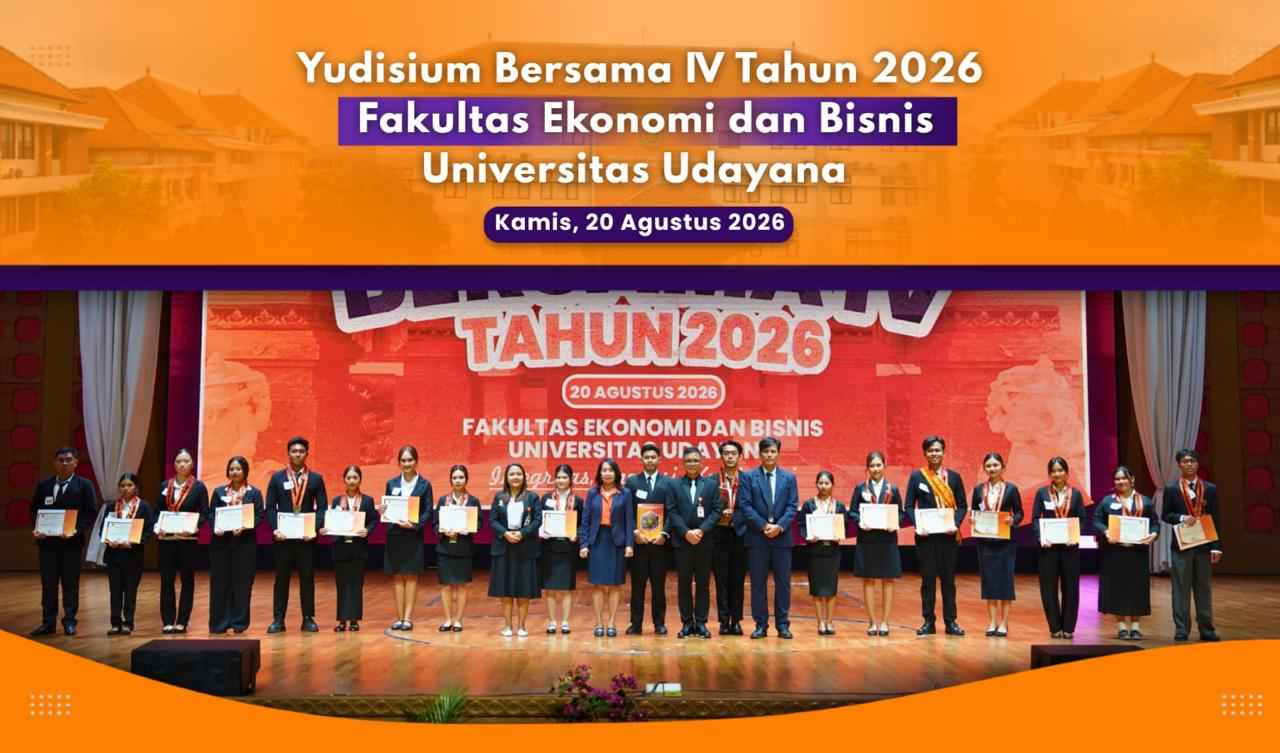
  • The 4th Yudisium Bersama of 2026: Faculty of Econo...
    Sabtu, 29 Agustus 2026
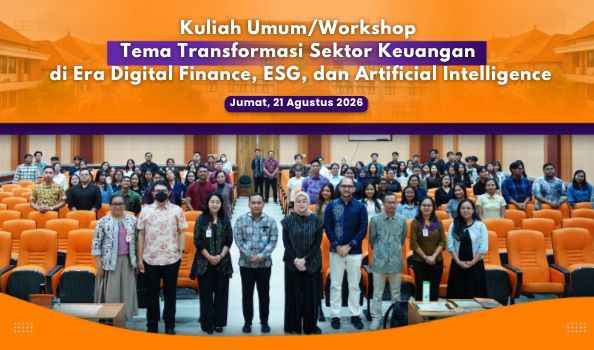
  • Public Lecture & Workshop: Financial Sector Transf...
    Jumat, 28 Agustus 2026
See More >>

Announcement

  • Adjustments to the Conduct of Lectures and Administrative Activities
    Rabu, 14 Oktober 2026
  • Implementation of the 5th Yudisium Bersama of 2026, Faculty of Economics and Business, Udayana University
    Senin, 12 Oktober 2026
  • Collection of Academic Transcripts and SKPI for the 177th and 178th Graduation Periods
    Kamis, 10 September 2026
See More >>

Agendas

  • MM Thesis Proposal Examination (3866), October 28, 2026
    Rabu, 21 Oktober 2026
  • MM Thesis Proposal Examination (3863), October 23, 2026
    Rabu, 21 Oktober 2026
  • MM Thesis Proposal Examination (3868), October 23, 2026
    Rabu, 21 Oktober 2026
See More >>

Contact Us

Master of Management Study Program, Udayana University


Jl. P.B. Sudirman, Sudirman Campus Denpasar

Phone : (0361) 232192


Email: mm@unud.ac.id

Information

  • Universitas Udayana
  • LPDP
  • LPPM Udayana
  • Career Development Center
  • Alumni
  • Science Direct
  • Proquest
  • Elsevier
  • IEEEXplore
  • IEEE Comp Society

Follow Us

© 2022 USDI - Universitas Udayana

  • Campus Map
  • Web Email